Water plays a bigger role in everyday life than most people realize. At home, it supports cooking, cleaning, bathing, gardening, and countless small routines that make a house comfortable. In a business, water may be essential to production, sanitation, equipment operation, or customer service. When something goes wrong with water quality, pressure, or distribution, the effects can quickly become frustrating and expensive.
The good news is that many common water-related problems can be managed with the right knowledge and equipment. Understanding how water systems work, recognizing early warning signs, and choosing suitable solutions can help property owners avoid unnecessary repairs while making better use of their resources.
Understanding What Your Water System Really Needs
Not every property has the same water requirements. A small family home may need basic filtration and dependable pressure, while a restaurant, workshop, or manufacturing facility might require specialized treatment and a carefully designed distribution network. Choosing equipment without understanding these differences can lead to disappointing results.
Related: Staying Comfortable in the Desert: Practical HVAC Advice for Nevada Homes
Start by identifying the problem rather than immediately buying a product. Does the water have an unpleasant smell? Are white mineral deposits appearing around faucets? Does the shower lose pressure when another tap is running? Perhaps equipment is wearing out faster than expected.
These symptoms can point toward different underlying causes. Hard water, sediment, excessive iron, plumbing restrictions, and poorly sized equipment all require different responses. A water test, pressure measurement, and basic inspection can help narrow down the possibilities.
It is also worth considering how water is used throughout the day. A household with several bathrooms has different peak-demand requirements from a small apartment. Likewise, a business that uses water continuously may need more capacity and redundancy than a facility with occasional demand.
Related: When to Replace Your Water Treatment System: A Practical Guide to Smarter Upgrades
Finding Reliable Options for Commercial Properties
Commercial buildings often face a balancing act between operating costs, performance, and reliability. Water interruptions can affect employees, customers, production schedules, and even regulatory compliance in certain industries. That is why planning matters just as much as the equipment itself.
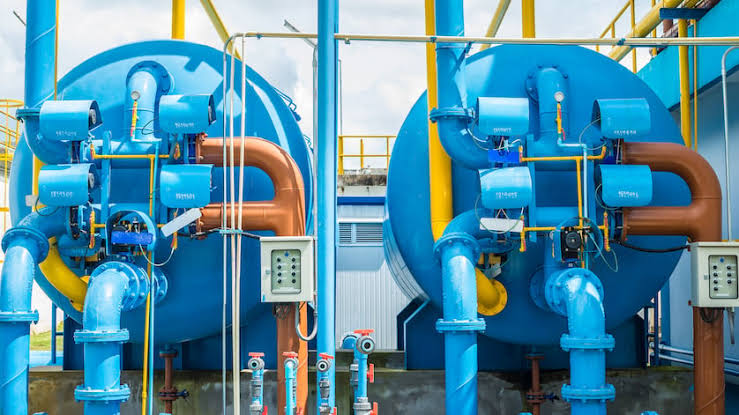
Well-designed commercial solutions begin with a clear understanding of the facility. Engineers or experienced water professionals may evaluate daily consumption, peak flow rates, incoming water quality, drainage requirements, and the needs of connected machinery. The objective is not simply to install a larger system, but to build one that performs consistently under real working conditions.
For example, a restaurant may need reliable filtration for food preparation and beverage service, while a commercial laundry could benefit from equipment designed to manage hardness and mineral buildup. A workshop might prioritize sediment control to protect machinery. Each setting calls for a different combination of components.
Related: A Practical Guide to Pond Water Treatment and Long-Term Pond Health
Maintenance deserves attention from the beginning. Filters need replacement, valves require inspection, and pumps or motors may need servicing over time. Keeping maintenance records and scheduling routine checks can reduce unexpected downtime. It may feel like another task on a long business checklist, but a little prevention often costs less than an emergency repair.
Improving Water Quality Without Overcomplicating Things
Water that looks clear is not necessarily free from every unwanted substance. Some dissolved minerals and contaminants cannot be identified by appearance alone. If quality is a concern, testing is a sensible first step.
Once the results are available, the treatment method should match the issue. Sediment filters can remove particles such as sand and rust. Activated carbon can improve certain taste and odor problems. Water softeners are designed to reduce hardness minerals, while reverse osmosis systems can reduce many dissolved substances when properly selected and maintained.
Related: Removals Aylesbury UK and Barking: Settling In Once the Boxes Are Unpacked
These technologies are useful, but no single device solves every water problem. Installing several filters without a clear purpose can increase costs, restrict flow, and create additional maintenance work. A system should be designed around actual water conditions and the intended use.
For many property owners, water treatment solutions offer a practical way to improve everyday water quality and protect plumbing or appliances from specific problems. Still, treatment equipment should be selected carefully. If drinking water safety is the main concern, use appropriate laboratory testing and follow local public-health guidance rather than relying only on taste, smell, or a product advertisement.
Remember that maintenance affects results. A neglected filter may become less effective, and equipment that has not been serviced according to the manufacturer’s instructions may fail to deliver the expected performance. Keeping track of replacement intervals makes the whole process easier.
Related: The Home Electrical Basics Everyone Ignores Until the Power Goes Out
Why Water Pressure and Movement Matter
Good water quality is only part of the picture. Water must also travel through a property at an appropriate rate and pressure. When that movement becomes unreliable, daily tasks can take longer and equipment may not operate as intended.
Common warning signs include fluctuating pressure, unusual pump noises, frequent cycling, leaks, or water that arrives slowly at distant fixtures. Sometimes the cause is straightforward, such as a clogged filter or partially closed valve. In other cases, the problem may involve undersized pipes, a failing pressure tank, or equipment that no longer matches demand.
The field of pumps & water movement covers the equipment and methods used to transport water through residential, commercial, agricultural, and industrial systems. Selecting a pump involves more than checking its advertised power. Flow rate, required pressure, vertical lift, pipe friction, and the characteristics of the water source all influence performance.
An oversized pump can waste energy and cycle excessively, while an undersized one may struggle to meet demand. Professional assessment can help identify a suitable model and reduce the risk of premature wear. Where appropriate, pressure controls and variable-speed systems can also help match pump output to changing water needs.
Never ignore persistent leaks or sudden pressure changes. Besides wasting water, these issues may indicate a developing plumbing or equipment fault. If the problem involves electrical components, contaminated water, or a pressurized system, qualified assistance is safer than improvised repairs.
Making Efficiency Part of the Plan
Efficiency does not always require replacing an entire system. Sometimes the biggest improvements come from small, practical changes: repairing dripping taps, insulating exposed pipes where needed, cleaning aerators, checking for hidden leaks, or replacing inefficient fixtures.
Businesses can benefit from reviewing water use across different processes. Tracking consumption over several months may reveal unusual increases that would otherwise go unnoticed. Meter readings, maintenance logs, and equipment inspections can help teams understand where water is being used and where losses may be occurring.
It is important to consider energy use, too. Heating water, pumping it over long distances, and operating treatment equipment all consume resources. A system that provides the required performance without excessive energy demand can offer long-term savings.
However, efficiency should never come at the expense of safety or necessary sanitation. Reducing water consumption is worthwhile when done intelligently, with equipment and procedures suited to the property’s needs.
Choosing Equipment That Will Last
Price is naturally part of any purchasing decision, but the cheapest option is not always the most economical over time. Consider installation costs, expected service life, replacement parts, energy consumption, warranty terms, and the availability of qualified technicians.
Before committing to a major installation, ask what the equipment is designed to remove or achieve, what maintenance it requires, and how its performance will be measured. A trustworthy provider should be able to explain these details in plain language instead of relying on impressive-sounding claims.
It is also sensible to think about future needs. A growing family, an additional bathroom, or an expanding business may increase demand. Equipment that can accommodate reasonable changes may offer better value than a system that becomes inadequate after a short period.
A Better Approach to Everyday Water Management
Reliable water systems rarely depend on one perfect product. They work well because the different parts are suited to the property, installed correctly, and maintained consistently. Water quality, pressure, distribution, and efficiency all deserve attention, even if only one issue prompted the original search for help.
Begin with the facts, identify the real problem, and compare solutions based on measurable needs rather than assumptions. Whether you are improving a household supply or managing a busy commercial facility, thoughtful planning can reduce waste, protect equipment, and make everyday water use more dependable.
In the end, good water management is about making life easier. With informed decisions and regular care, a water system can quietly do its job in the background, exactly as it should.